19 / 02 / 2015
On 26-28 February 2015 researchers from Germany, Austria, France, the USA, and the Czech Republic gathered in Plzeň to discuss the phenomenon of loyalty in 19th-century culture and society at the 35th Plzeň Symposium on 19th-Century Issues. This year’s symposium, with the theme “Invisible Loyalty? Austrians, Germans and Czechs in 19th-Century Czech Culture”, was organised by the Institute of Art History, Academy of Sciences of the Czech Republic, and the Institute of Czech Literature, Academy of Sciences of the Czech Republic, in cooperation with the West Bohemian Gallery in Plzeň. The conference was accompanied by an exhibition entitled “The Risk of Loyalty? Austrian, German, and Czech Cultural Loyalties in 19th-Century Czech Art”, prepared by the West Bohemian Gallery in Plzeň in cooperation with the Institute of Art History, Academy of Sciences of the Czech Republic. The West Bohemian Museum in Plzeň also prepared an exhibition to accompany the symposium. A literary evening focusing on Johannes Urzidil’s work Ich bin hinternational took place in the Artamo coffee-house, Čelakovského 5, Plzeň.
Attached file: plzen35.pdf
Attached file: Pozvánka Riziko loyálnosti.pdf
18 / 02 / 2015
The Exhibition “The Risk of Loyalty?” Opens in the West Bohemian Gallery in Plzeň in Exhibition Room “13”
We invite you to visit exhibition room “13” in the West Bohemian Gallery in Plzeň, where the exhibition “The Risk of Loyalty? Austrian, German, and Czech Cultural Loyalties in 19th-Century Czech Art” is now open. The exhibition was prepared by Taťána Petrasová from the Institute of Art History, Academy of Sciences of the Czech Republic, together with Markéta Theinhardt from Université Paris 4 – Sorbonne. The theme corresponds to the focus of this year’s meeting of experts on 19th-century issues, which is being held in Plzeň this year for the 35th time.
Attached file: Pozvanka webova Riziko loyalnosti.pdf
22 / 12 / 2014
Best wishes for 2015
The Institute of Art History wishes you all the best for 2015.
Attached file: udu pf 2015.jpg
07 / 12 / 2014
The Czech Chamber of Architects awarded Prof. Rostislav Švácha
The Czech Chamber of Architects (Czech acronym ČKA) this year awarded its annual Pocta prize to Professor Rostislav Švácha, a respected expert on modern and Baroque architecture from the Institute of Art History, Academy of Sciences of the Czech Republic. ČKA has awarded this prize since 2000 to figures who have found a prominent place in the history of modern Bohemian and Moravian architecture. In explaining the reasons for this year’s choice the commission stressed the “clear views on the calling of architecture” expressed by this historian of architecture and university teacher in advocating the acceptance of architecture by contemporary Czech society as an important cultural and social phenomenon. Švácha’s books, published by the prestigious MIT University Press – Karel Teige, 1900-1951: L´Enfant Terrible of the Czech Modernist Avant-Garde, Cambridge, Mass. - London 1999 (co-editor Eric Dluhosch), and The Architecture of New Prague, 1895-1945, Cambridge, Mass. - London 1995 – promoted Czech avant-garde architecture in a world setting.
05 / 12 / 2014
In the fourth issues of Umění / Art 2014 we would like to draw your attention to articles about the depiction of reality in the Late Middle Ages by Meteusz Grzęda or a new interpretation of van Gogh’s A Pair of Shoes. Do not miss an treatise of Skarina’s Russian Bible in the context of Christian and Jewish book printing in Prague in the early sixteenth century.
19 / 11 / 2014
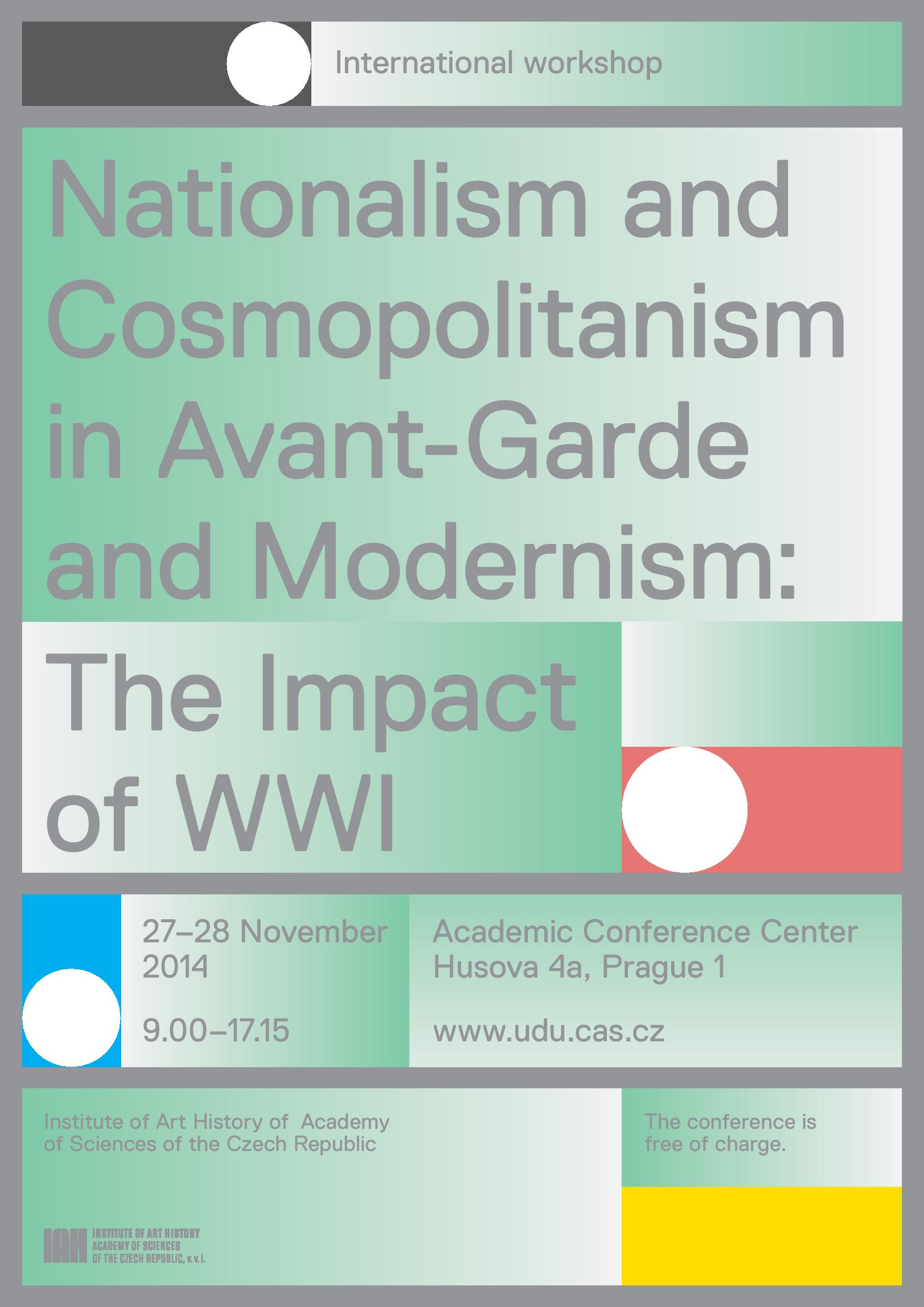
On 27-28 November 2014 an international conference will take place in Prague entitled “Nationalism and Cosmopolitanism in Avant-Garde and Modernism: The Impact of WWI”. This two-day meeting of specialists is a follow-up to the international symposium “The European Artistic Avant-Garde c. 1910-1930: Formations, Networks and Transnational Strategies” held in Stockholm in 2013. The conference will focus on issues relating to the national, the transnational, and the cosmopolitan in modernist and avant-garde art before the outbreak of the First World War, during the war, and after it. Geographically the presentations will concentrate on the regions of Central and Eastern Europe, the Baltic states, and Scandinavia.
Venue: Academic Conference Centre, Husova 4A, Prague 1.
The conference is free of charge.
Attached file: WWI_ poster_JPG.jpg
Attached file: WWI_programme_actual.pdf
18 / 11 / 2014
Option statt Mission: J. L. Hildebrandt und der böhmische Guarinismus
You are invited to attend a lecture ‘Option statt Mission: J L Hildebrandt und der böhmische Guarinismus‘ by Peter Heinrich Jahn (Technische Universität Dresden) which will be held as a part of the cycle of lectures Collegium Historiae Artium on Wednesday 28 November 2014 at 3.30 p.m. on the premises of the Institute of Art History at Husova 4, Prague 1, in room 117 on the first floor.
Attached file: CHA_Peter Heinrich Jahn.pdf
12 / 11 / 2014
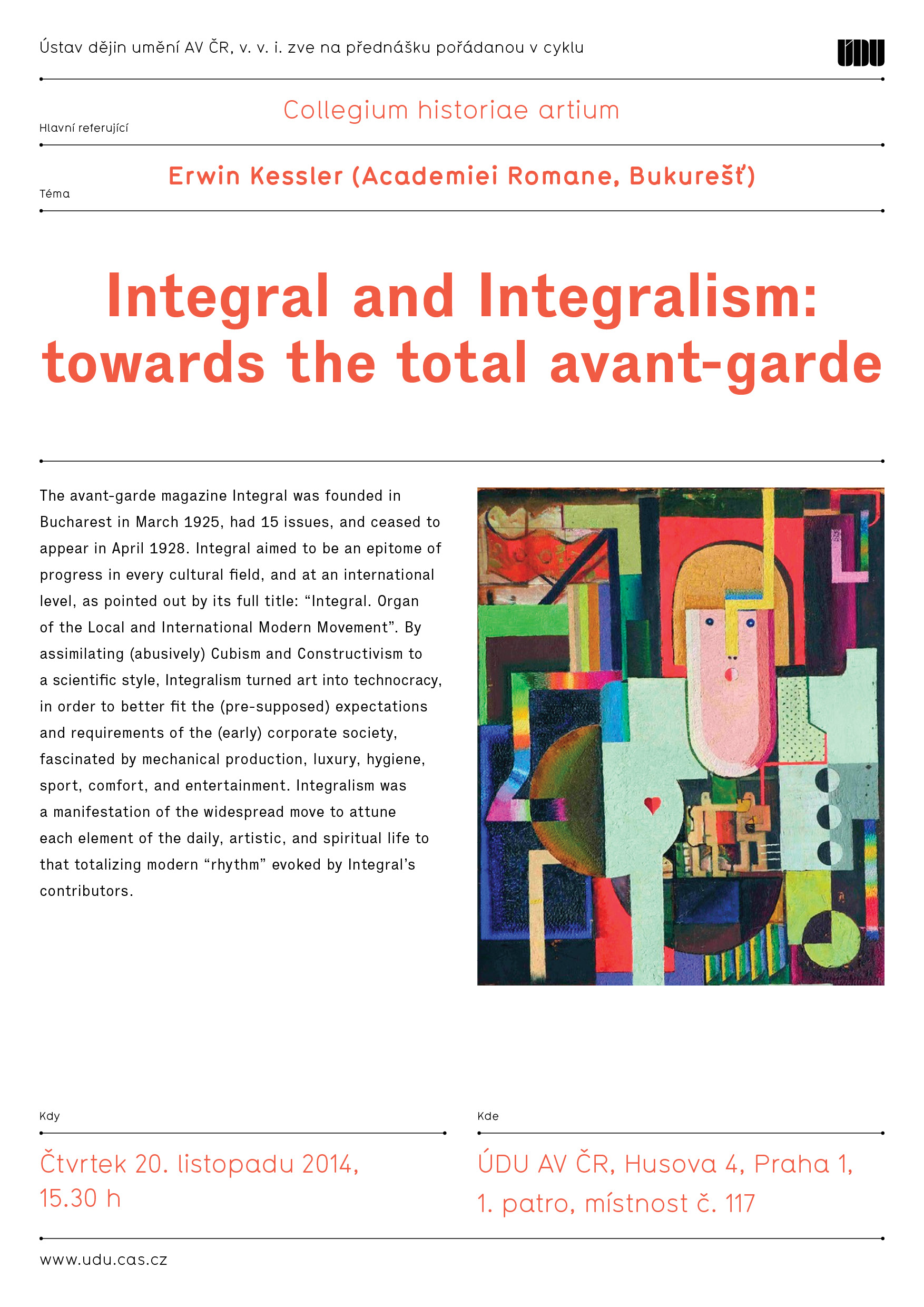
Integral and Integralism: towards the total avant-garde
You are invited to attend a lecture ‘Integral and Integralism: towards the total avant-garde’ by Erwin Kessler, Academiei Romane, Bucharest, which will be held as part of the cycle of lectures Collegium Historiae Artium on Thursday 20 November 2014 at 3.30 p.m. The lecture will be held on the premises of the Institute of Art History at Husova 4, Prague 1, in room 117 on the first floor. The avant-garde magazine Integral was founded in Bucharest in March 1925, had 15 issues, and ceased to appear in April 1928.
Attached file: CHA_Erwin Kessler_03.jpg
11 / 11 / 2014
Ceremonial as a Key to Understand Early Modern Diplomacy
The team granted by the Czech Science Foundation in the project ‘Bohemian and Moravian Nobility in the Service of Austrian Habsburgs (1640–1740)’ organizes an international workshop on diplomacy. The workshop ‘Ceremonial as a Key to Understand Early Modern Diplomacy’ takes place on 14 November 2014 in AKC, Husova 4a, Prague.
Attached file: WS Ceremoniel 2014.pdf
07 / 11 / 2014
Exhibition Hagenbund. A European Network of Modernism (1900 to 1938) in Vienna
Prof. Vojtěch Lahoda, director of the Institute of Art History of the Academy of Sciences of the Czech Republic, is a member of the team of researchers who prepared a book ‘Hagenbund. A European Network of Modernism (1900 to 1938)’. Artist and artworks presented in this book are displayed now in Vienna, Lower Belvedere, from 11 October 2014 until the 1st February 2015.
The Vienna artist association Hagenbund had a major impact both on the local and Central European art scene between the years 1900 and 1938. It brought together various styles and advanced as early as 1907 to become a leading association for modern art, soon moving beyond Secessionism to represent current trends ranging from Expressionism to New Objectivity.
This artist association and its members established themselves through inclusive exhibition policies. Indeed, there was a group show featuring Hungarian, Polish, Czech, and German artists as early as 1907. Hagenbund - A European Network of Modernism (1900 to 1938) aims to present this European network and its activities in an innovative way and to provide new perspectives on the development of Austrian modernism, especially between the two world wars. The show is not dedicated to the battle of the isms or classifying art according to formal criteria but addresses the influences and interactions between artists in Vienna, Prague, Munich, Budapest, Lemberg (Lviv), Bratislava, Cracow, and Trieste.
23 / 10 / 2014
Presentation of the journal Convivium and the lecture ‘Byzantium beyond Byzantium’ by Francesco Lovino
You are invited to attend a lecture by Francesco Lovino (Università di Padova) on “Byzantium beyond Byzantium: The Italo-Greek Manuscripts of the Biblioteca Nazionale Marciana of Venice (10th -13th century)”, which will be held on Tuesday 4 November 2014 at 15:00 as part of the cycle of lectures “The Middle Ages in Motion”. The lecture will be followed by a presentation of Convivium, a new specialist journal published jointly by the Centre for Early Mediaeval Studies at the University in Brno; the Institute of Art History, Academy of Sciences of the Czech Republic; and the Université de Lausanne. The presentation will be attended by the editor-in-chief Ivan Foletti (see attachment). The lecture and presentation will be held on the premises of the Institute of Art History at Husova 4, Prague 1, in room 117 on the first floor.
Attached file: SD_23.pdf
Attached file: convivium_plakat.pdf
08 / 10 / 2014
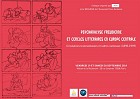
Echoes of Sigmund Freud in Central European Culture: Symposium at the Sorbonne
The young French researchers Clara Royer and Jean-François Laplénie from the Sorbonne in Paris organised an international symposium there on 19-20 September 2014 on the theme “Psychoanalyse Freudienne et Cercles Littéraires en Europe Centrale: Circulations transnationales et cadres nationaux (1895–1939)”. Papers were presented there not only by a group of French experts but also by guests from Germany, Hungary, Poland, Slovakia, and the Czech Republic, while other contributions on the theme came from Russia and Italy. The programme included both more general presentations and case studies on individual writers or works. The Institute of Art History in Prague was represented at the symposium by Lenka Bydžovská, who gave a paper on the relationship between Jindřich Štyrský’s book Dreams and Freud’s epoch-making Interpretation of Dreams.
06 / 10 / 2014
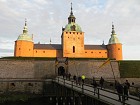
The penultimate specialist gathering of the five-year Palatium project funded by the European Science Foundation (http://www.courtresidences.eu) took place in Kalmar, Sweden, on 2-3 October 2014, organised by the Kalmar Linnéuniversitetet. The theme of this international conference, which was held in Kalmar Castle – one of the most important 16th-century Swedish royal residences – was court ordinances and their relationship to the creation and use of space in early modern residences. During the two-day programme a number of papers were heard that examined specific residences of royal families in the light of individual ordinances. Specific studies considered examples from Hungary, Bohemia and Moravia, England, Holland, Spain, Portugal, Italy, and Sweden, in the period from the second half of the 15th century to the end of the 17th century. Czech researchers were represented at the conference by Martin Krummholz, who gave a presentation on the princely residences of the Liechtenstein family in the second half of the 17th century.
07 / 09 / 2014
Utopie in Helsinki
At the end of August (29-31 August 2014) the fourth major conference took place in the regular series convened and prepared every two years by EAM (the European Network for Avant-Garde and Modernism Studies). The venue for this year’s conference was the university in Helsinki, and the main theme was the concept of utopia from the viewpoint of interdisciplinary and intermedial research into modernism and the avant-garde in Europe. During the three days some 300 papers were presented in numerous parallel panels, and every evening a keynote lecture was given. The Institute of Art History, Academy of Sciences of the Czech Republic, was represented at the conference by Vojtěch Landa and Lenka Bydžovská, who presented a paper in the panel “Artistic couples: a utopia of creative collaboration and ideal partnership”. The meetings organised by EAM are always an excellent opportunity to extend specialist contacts in the field and to prepare various international projects.
05 / 09 / 2014
We are glad to inform you that a catalogue has just been published, in a parallel Czech and German edition, to accompany the exhibition Josef Führich (1800–1876). From Chrastava to Vienna. The texts by Pavla Machalíková and Petr Tomášek examine the changes in Führich’s work in the context of the development of the visual arts in the Czech lands, and Führich’s position in the interpretation of changes in painting in the 19th century.
28 / 08 / 2014
You are invited to attend the latest in the regular series of meetings entitled The Middle Ages in Motion, which will be held in the Institute building at Husova 4, Prague 1, in room 117 on the first floor, on Thursday 4 September 2014 at 16:00. The lecturer, Evelin Wetter from the Abegg-Stiftung, Riggisberg, will examine issues related to oriental textiles in the milieu of the Bohemian royal court. You will be welcome to attend!
Attached file: SD_22_Wetter.pdf
11 / 08 / 2014
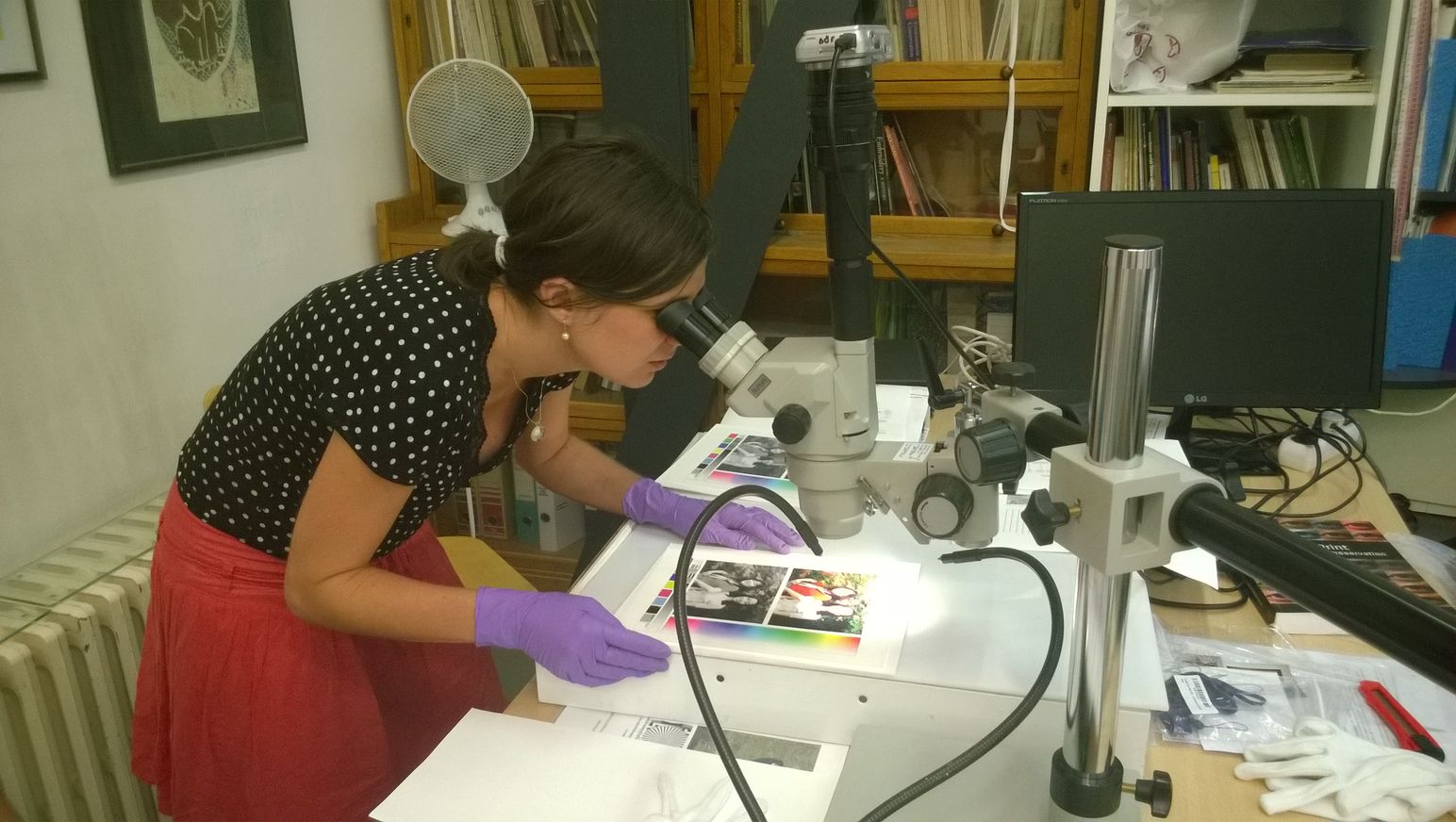
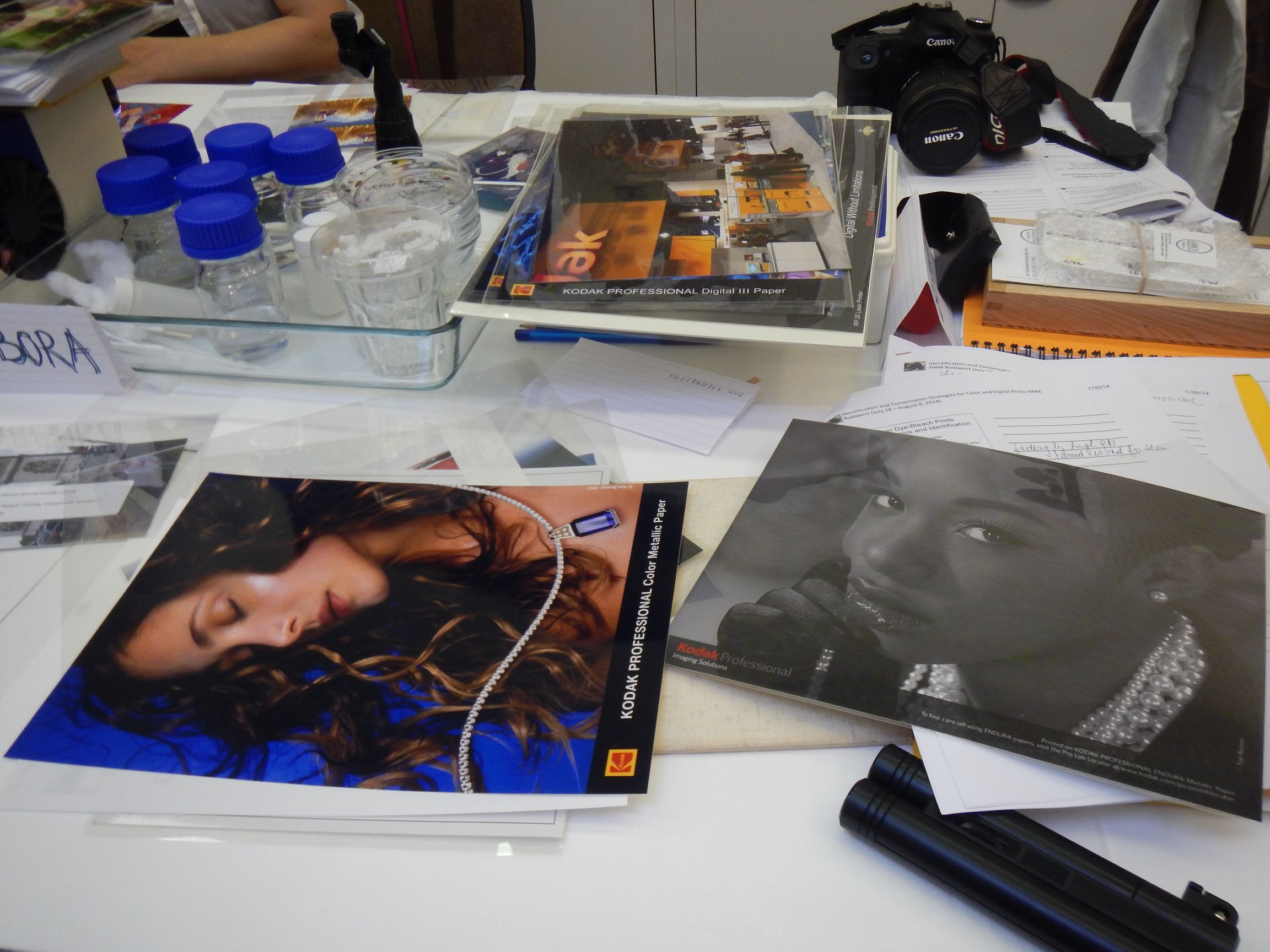
The restorer Tereza Cíglerová from the Institute of Art History, Academy of Sciences of the Czech Republic, took part in an international workshop on the identification and restoration of colour and digital photographs from 28 July to 8 August 2014. The workshop, entitled Advanced-Level Workshop in Photograph Conservation: Identification and Conservation Strategies for Color and Digital Prints, was organised for restorers of photographs, in particular from Central and Eastern Europe, by the Getty Conservation Institute. The two-week training course was held in the Hungarian National Museum (Magyar Nemzeti Múzeum) in Budapest.
Attached file: poster.pdf
Attached file: 19a.jpg
Attached file: 07a.jpg
15 / 05 / 2014
The conference ’Looking for Leisure: Court Residences and their Satellites, 1400–1700 will take place 5–7 June 2014 in the Academic Conference Center Husova 4a, Prague 1, 110 00. The aim of the conference is to draw attention to small buildings in residential complexes – small only in size but not in importance. We will study the relationship of the palazzotto to European palaces and examine their function as pendants but also counterparts to the large palatial buildings. The idea of a small palace usually made it possible to develop certain ideological programs that would have been difficult to achieve with only the large palace.
Attached file: Looking for Leisure_2014.docx
16 / 04 / 2014
The international workshop ‘The Discovery of Central-Plan Forms. Architecture in France and the Czech Lands between 1500 and 1800’ organised by Institute of Art History ASCR and École pratique des hautes études (EPHE) – Sorbonne occurs 16–18 April 2014. The workshop is a part of the prepared project Constance / Change of Architectural Forms: The Czech Lands and France in the Early Modern Era.
Attached file: EPHE_IAH_Prague 2014_program_def.pdf
20 / 02 / 2014
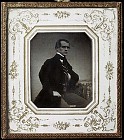
The autumn of 2012 saw the launch of the unique Daguerreobase international project, with the support of the European Competitiveness and Innovation Framework Programme (CIP). The aim of the project is to create an extensive database of daguerreotypes, daguerreotype equipment, contemporary reproductions, publications, and other related historical material from public and private collections in Europe. The database, which by the end of the project in March 2015 will contain more than 25 000 records of objects in various European collections, will be accessible to all those who are interested from among the specialist and broader public. In this way a key tool for research into and knowledge of this pioneering era of photography will be created, which will be available not only to specialists in the field of photographic research, but also to those who are interested in other academic disciplines, and which will in addition help protect one of the oldest photographic techniques. Preserving daguerreotypes and spreading knowledge about them is all the more urgent in that every daguerreotype, unlike all other types of photograph, is in principle unique.
The Daguerreobase project was initiated by the museums of photography in Antwerp and Rotterdam, and a number of other leading European institutions are involved in it, such as the Museum Ludwig in Cologne, Det Kongelige Bibliotek in Copenhagen, and the Atelier de Restauration et de Conservation des Photographies de la Ville de Paris. The main partner of the project in the Czech Republic is the National Technical Museum in Prague.